
Swiss machining, a high-precision manufacturing technique, has evolved from its origins in Switzerland’s watchmaking industry to become a cornerstone technology in sectors such as aerospace and electronics. Today, Swiss CNC machining is recognized for its ability to produce long, slender, and intricate components with unmatched accuracy, efficiency, and repeatability. In this article, we explore the fundamentals, key components, applications, benefits, and future trends of swiss machining to help you understand its unique capabilities and challenges.
What is Swiss Machining?
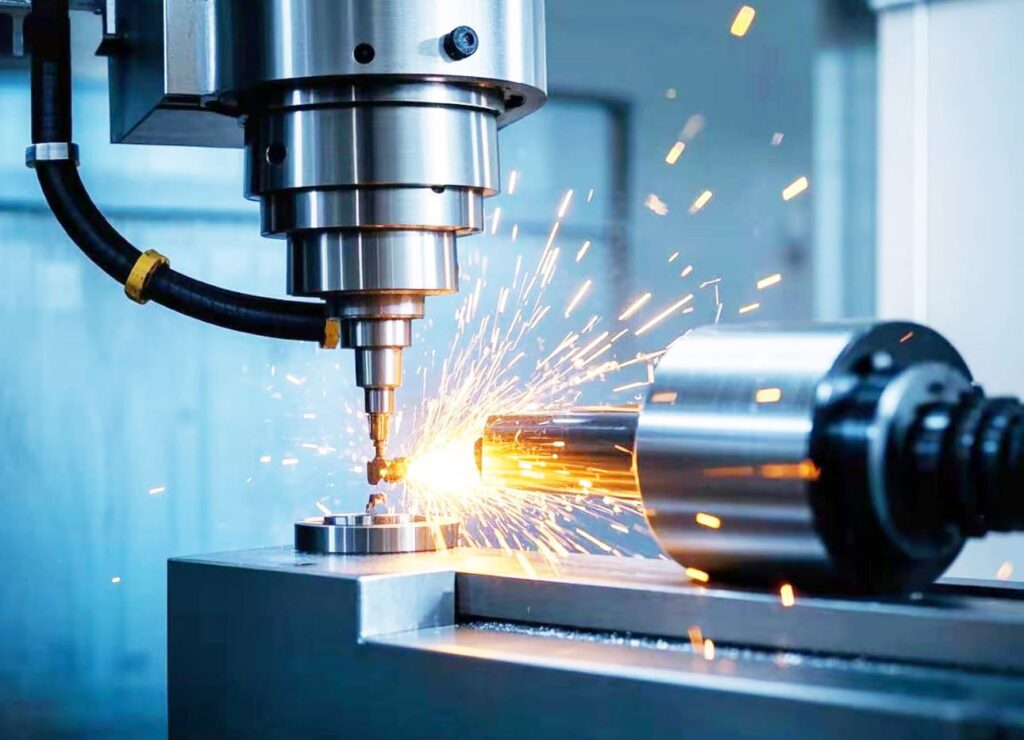
Swiss machining, also referred to as Swiss turning or Swiss-type lathe machining, is a specialized process aiming for manufacturing complex and high-tolerance parts. One of the main distinctions of Swiss CNC machining is the sliding headstock and guide bushing mechanism, which supports the workpiece extremely close to the tool. This minimizes deflection and vibration, resulting in exceptional accuracy—often achieving tolerances as tight as ±0.005mm.
Originally developed in the late 19th century to support the Swiss watchmaking industry, the process has dramatically advanced with automation and CNC integration. Modern swiss CNC machining now provides multi-axis functionality, simultaneous machining operations, and high-volume production efficiency across numerous industries.
How Does Swiss Machine Work?
Swiss machining operates on a unique set of principles that differentiate it from conventional CNC lathes. At its core, the process combines three key elements: guide bushing support, sliding headstock motion, and synchronized multi-axis machining. This innovative approach enables the production of small components with exceptional precision and efficiency.
Key Components and Their Roles
- Guide Bushing: The guide bushing is a critical component that supports the workpiece close to the cutting tool. By minimizing deflection and vibration, it ensures high precision, especially when machining long, slender parts.
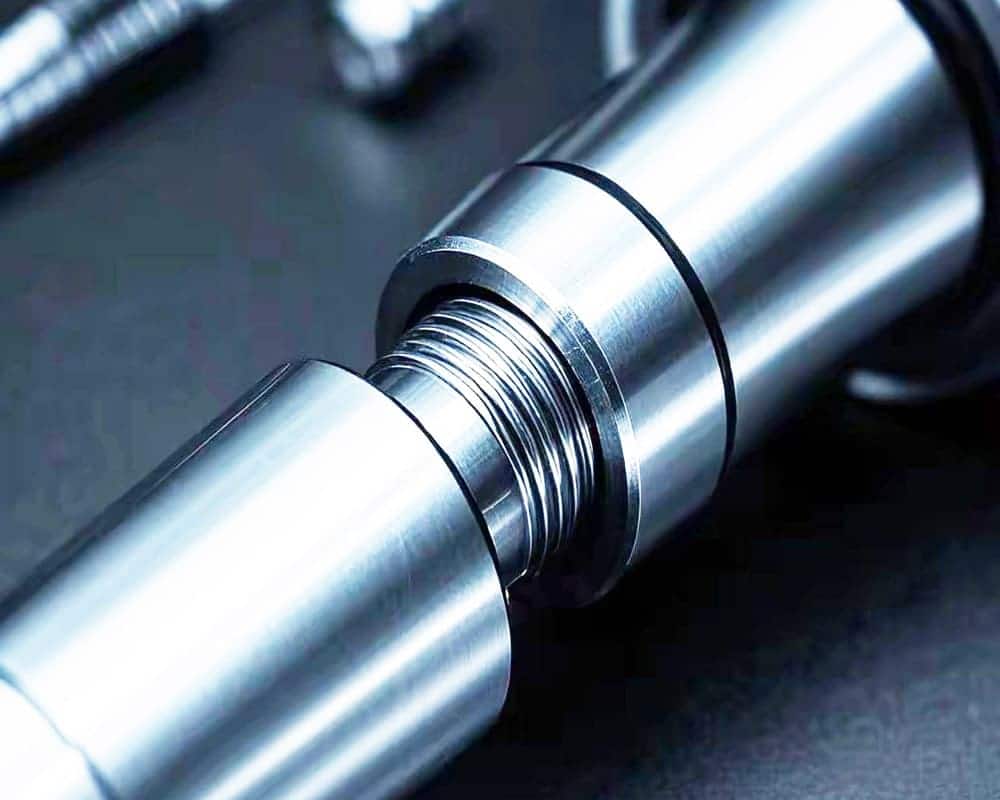
- Sliding Headstock: Unlike traditional lathes where the workpiece remains stationary, Swiss machines use a sliding headstock to move the material forward and backward through the guide bushing. This dynamic motion allows for precise control over the cutting process.
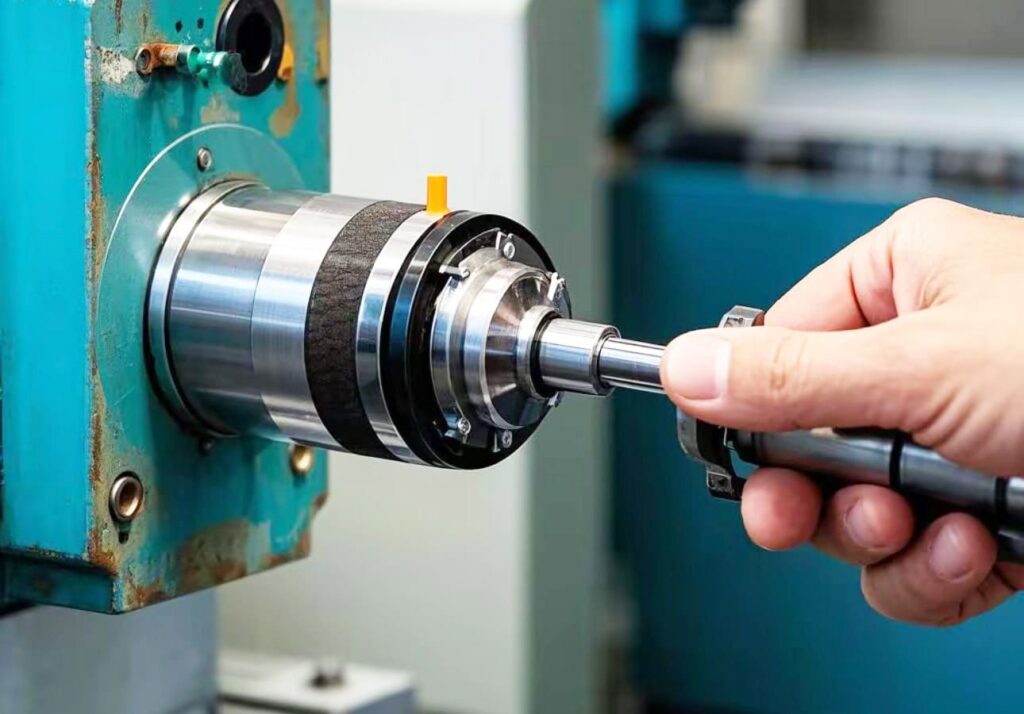
- Multiple Spindles and Tool Turrets: Swiss CNC lathes often feature main and sub-spindles, along with multiple tool turrets. This setup enables simultaneous operations such as turning, milling, drilling, and threading in a single cycle, significantly reducing machining time and improving efficiency.
The Machining Process
The Swiss CNC machining process is engineered around stability, synchronization, and ultra-precise material control. Below is a clear, step-by-step breakdown of how the Swiss CNC machining process functions in real production environments.
- Material Feeding: The raw material, typically metal or plastic bar stock, is continuously fed through the guide bushing into the cutting zone. The sliding headstock incrementally advances the material, ensuring precise engagement with the cutting tools.
- Synchronized Multi-Axis Operations: As the workpiece moves, multiple tools mounted on different axes perform simultaneous machining operations. For example, while the main spindle turns the part, a secondary spindle may drill or mill features on the opposite end. This capability allows complex geometries to be completed in a single setup.
- High-Speed, High-Precision Cutting: The combination of guide bushing support and synchronized tool movements enables Swiss screw machining to achieve extremely tight tolerances and superior surface finishes.
- Secondary Operations with Sub-Spindle: Advanced Swiss lathes feature a sub-spindle that seamlessly transfers parts for backside machining. This eliminates the need for additional setups, streamlining production and improving overall efficiency.
Swiss Machining Vs. Traditional CNC Machining
Swiss machining and traditional CNC machining are both widely used in precision manufacturing, but they differ significantly in their operational principles, applications, and advantages.
| Feature | Swiss Machining | Traditional CNC Machining |
| Workpiece Support | Uses a guide bushing for close support, minimizing deflection and vibration. | Relies on chuck or collet systems, less effective for long, slender parts. |
| Material Feeding | Sliding headstock feeds material through the guide bushing for precise control. | Typically uses stationary material feeding, less precise for complex parts. |
| Multi-Axis Capabilities | Multiple spindles and tool turrets enable simultaneous operations in one cycle. | Operations are often performed sequentially, increasing production time. |
| Precision and Tolerances | Achieves ultra-tight tolerances (as low as ±0.005mm) and superior surface finishes. | Precise but may not match Swiss machining for small or intricate components. |
| Applications | Ideal for small, complex, and long parts. | Better suited for larger, less intricate components and a broader material range. |
Swiss machining excels when producing small, intricate, or high-aspect-ratio parts requiring extreme precision. Traditional CNC machining remains more flexible for larger parts and a broader material range.
Pros and Cons of Swiss Machining
Additionally, Swiss CNC machining offers numerous advantages in precision manufacturing, but it also comes with certain limitations. Below is a breakdown of its key benefits and drawbacks.
Pros of Swiss Machining
- High Precision and Tight Tolerance: Swiss CNC machines can achieve tolerances as tight as ±0.005mm, making them ideal for industries requiring extreme accuracy, such as medical, aerospace, and electronics. This level of precision ensures that even the most intricate components meet stringent quality standards.
- Superior Stability: The guide bushing provides continuous support to the workpiece, significantly reducing material deflection and vibration. As a result, Swiss machining is perfect for producing long, thin, and high-aspect-ratio components that conventional lathes often struggle to handle.
- Multi-Operation Integration: Swiss CNC lathes can perform multiple operations in a single setup. This eliminates the need for secondary operations, streamlining the production process and reducing overall machining time.
- High-Volume Production: Swiss screw machines are highly automated and capable of running unattended for extended periods. This makes them perfect for high-volume, low-cycle-time production runs, ensuring consistent quality and reducing labor costs.
- Excellent Surface Finish: The close cutting support from the guide bushing, combined with the precision control of CNC technology, enables exceptional surface finishes. This often eliminates the need for post-processing, saving both time and resources.
- Minimal Material Waste: The precision cutting process minimizes scrap, making Swiss machining more cost-effective, especially when working with expensive materials like titanium and medical-grade stainless steel.
Cons of Swiss Machining
- High Initial Investment: Swiss CNC machines are significantly more expensive than conventional lathes, requiring a substantial upfront investment in both machinery and specialized tooling. Limited to Small and Medium-Sized Parts: Swiss machining is optimized for small-diameter workpieces, typically under 32mm (1.25 inches). For larger parts, conventional CNC equipment is often a more practical choice.
- Complex Setup and Programming: Programming Swiss CNC machines is more complex than traditional CNC lathes due to the simultaneous multi-axis operations and toolpath coordination. This requires skilled operators and programmers, adding to the overall cost and complexity.
- Not Ideal for Low-Volume, One-Off Prototypes: Due to the setup time and tooling costs, Swiss machining is best suited for medium-to-high-volume production. For low-volume, one-off custom parts or prototypes, other machining methods may be more cost-effective.
Applications of Swiss Machining Parts
Swiss machining is widely utilized across industries that demand exceptional precision and superior surface finishes. Its ability to produce intricate components makes it indispensable in the following fields:
Medical Industry:
- Surgical Instruments: Scalpels, forceps, and biopsy tools, ensuring sharpness and precision for delicate procedures.
- Implants: Orthopedic screws, dental implants, and spinal rods with ultra-tight tolerances (±0.005mm) for perfect fit and biocompatibility.
Aerospace Industry
- Micro Fasteners: High-precision screws and bolts used in aircraft assembly to withstand extreme conditions.
- Sensor Components: Critical parts for navigation, monitoring, and avionics systems requiring extreme accuracy.
- Fuel Nozzles: Ultra-smooth components (e.g., Ra0.2 surface finish) to enhance fuel atomization and efficiency.
Automotive Industry
- Fuel Injection Systems: Precision-engineered nozzles and valves to optimize fuel efficiency and engine performance.
- Transmission Parts: Gears, shafts, and connectors designed for high durability and seamless power transmission.
Electronics Industry
- Connectors: Miniature pins and sockets for high-density electronic circuits and communication devices.
- Micro Shafts: Tiny, high-precision rotating components essential for motors, sensors, and high-performance electronics.
Defense & Firearms Industry
- Weapon Components: Precision-machined firing pins, triggers, and safety mechanisms for firearms.
- Optical and Laser Sight Parts: High-accuracy housings and adjustment mechanisms for scopes and laser sights.
Luxury & Watchmaking Industry
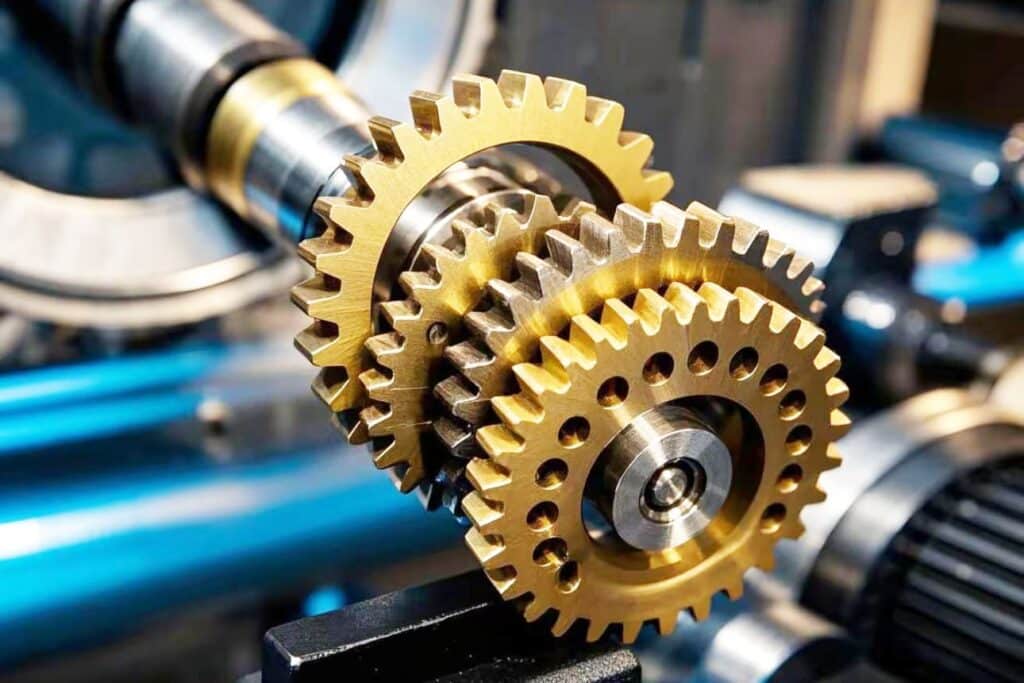
- Watch Components: Tiny, intricately designed gears, screws, and movement parts that require extreme precision.
- Jewelry & Accessories: High-end metal components for custom-designed rings, clasps, and decorative embellishments.
Material Available in Swiss Machining
Like traditional machining, Swiss machining also supports a wide range of materials. The choice of material depends on factors such as hardness, machinability and thermal properties. Below are some of the most commonly used materials in Swiss machining:
1. Stainless Steel:
Stainless steel, including grades like 304, 316, and 17-4 PH, is renowned for its corrosion resistance, strength, and durability. These properties make it a preferred choice for medical implants, aerospace components, and industrial parts.
2. Titanium
Titanium, such as Grade 5 and Ti-6Al-4V, is valued for its high strength-to-weight ratio and biocompatibility. These characteristics make it ideal for medical implants, aerospace fasteners, and high-performance automotive parts.
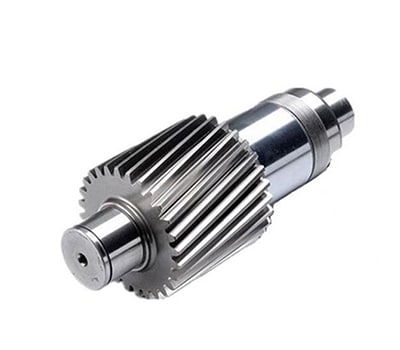
3. Aluminum
Aluminum, particularly grades 6061 and 7075, is lightweight, easy to machine, and resistant to corrosion. These qualities make it a popular choice for industries where weight reduction and precision are key considerations.
4. Brass and Copper
Brass and copper, including C360 and C110, are known for their excellent electrical conductivity and corrosion resistance. These materials are frequently used in electrical connectors, plumbing fittings, and decorative components.
5. Tool Steel
Tool steel, such as D2, A2, and M2, is characterized by its high hardness and wear resistance. These properties is suitable for cutting tools, dies, and high-strength mechanical parts.
6. Plastics
Plastics such as PEEK, Delrin, and PTFE are valued for their unique properties. PEEK offers high heat resistance and biocompatibility, making it fit for medical implants and aerospace components. Delrin provides low friction and high wear resistance, ideal for gears and bearings. PTFE, known for its chemical resistance and low friction, is often employed in seals, gaskets, and medical devices.
The Future of Swiss Precision Machining
Swiss precision machining is a cornerstone of modern manufacturing, producing high-precision components. As technology evolves, several key trends are shaping the future of this sector, driving innovation and expanding its capabilities.
Automation and Robotics
The integration of advanced automation and robotic systems is transforming Swiss precision machining. Robots are increasingly used for tasks like loading and unloading parts, reducing human error, improving consistency, and boosting efficiency. This shift allows for faster production, reduced downtime, and enhanced capabilities in handling small-batch, high-precision manufacturing.
3D Printing
While Swiss machining traditionally relies on subtractive methods, the integration of 3D printing is opening new possibilities. This combination enables the production of highly complex parts that are difficult or impossible to achieve with traditional techniques. Additive manufacturing also supports rapid prototyping, reducing lead times and enabling the creation of lightweight, intricate geometries.
Enhanced Materials and Cutting Tools
Advances in materials science and cutting tool technology are expanding the capabilities of Swiss precision machining. High-performance alloys, composites, and ceramics, along with innovative tool coatings, allow for faster machining and superior finish quality. These developments make it possible to machine tougher materials like titanium more effectively, broadening the range of applications.
Micro Machining and Miniaturization
The demand for miniaturized components, particularly in the medical and electronics sectors, is driving advancements in micro-machining. Swiss precision machining is now capable of producing ultra-small, high-precision parts, such as those used in wearable electronics, medical implants, and micro-electromechanical systems.
Tips for Swiss CNC Machining
To achieve the best results, it’s essential to follow certain guidelines and best practices. Below are some useful tips to optimize Swiss CNC machining.
1. Choose the Right Material
Material selection is critical in Swiss machining, as the process excels at working with small, high-precision parts. Opt for materials well-suited to this type of machining, such as stainless steel, titanium, brass, and plastics. Additionally, be mindful of material hardness, as harder materials can cause tool wear. If working with harder metals, ensure your tooling and machine settings are appropriate to avoid damaging the parts or tools.
2. Optimize Tooling and Cutting Tools
Using high-quality tools designed specifically for Swiss machining is essential for ensuring accuracy and minimizing tool wear. The size and shape of the cutting tool are also crucial; smaller tools are often needed for tighter tolerances but tend to wear out faster. To enhance performance, consider utilizing coated tools, which offer longer tool life and better performance, especially when cutting hard materials.
3. Understand the Importance of Chip Control
Efficient chip removal is vital in Swiss machining due to the sliding headstock design, which can lead to clogging if chips are not managed properly. Choose the right chip-breaking geometry and feed rates to ensure smooth chip flow. Additionally, use adequate coolant flow to prevent overheating, improve tool life, and assist with chip evacuation.
4. Set the Correct Cutting Parameters
Swiss machining typically operates at high speeds with very low feed rates to achieve precise results. Adjust the speed and feed rates to suit the material being cut and the tool being used. For precision, it’s often best to take shallower cuts, as this improves accuracy while reducing tool stress.
5. Program with Precision
Swiss CNC machines are known for their high precision, so it’s crucial to ensure that the design and program account for tight tolerances. Optimize machine settings to maintain these tolerances consistently. Before running the program on the actual machine, simulate it in CAM software to check for errors in tool paths and ensure smooth operation.
6. Proper Machine Maintenance
Regular maintenance is key to keeping Swiss CNC machines operating at peak performance. Conduct frequent inspections of components such as guideways, headstocks, collets, and spindles to ensure accuracy and prevent unexpected breakdowns. Proper lubrication is also essential to avoid wear and maintain performance. Finally, keep the machine and its components clean to prevent contamination, which can affect both part quality and machine performance.
Following these principles ensures optimal performance from swiss CNC machining operations.
Choose Appropriate Swiss CNC Services
When choosing the appropriate Swiss CNC services, it’s essential to focus on critical factors such as precision, part complexity, and material compatibility. Additionally, ensure the supplier has the necessary capabilities to handle your specific requirements, whether it involves multi-axis machining or achieving fine tolerances.
When evaluating Swiss turning machine suppliers, consider the capabilities of the machines, such as the number of axes, material handling, and the reputation of machine brands. Furthermore, the supplier should offer advanced features like live tooling and automation to improve efficiency and precision.
Key factors in choosing the right Swiss CNC machine shop include quality control, experience in your industry, lead times, and the ability to offer flexible production schedules. Moreover, customer support and communication are vital for ensuring smooth collaboration and project success.
For example, Ancastings Precision is a reliable provider of high-precision CNC machining services, specializing in Swiss turning, milling, and custom manufacturing solutions. With a focus on exceptional quality and timely delivery, we serve a wide range of industries and meet our client’s precision machining needs.
Conclusion
Swiss machining continues to stand out as one of the most advanced precision manufacturing technologies available today. Its ability to produce intricate, slender, and high-tolerance parts—combined with multi-operation integration and exceptional stability—makes it invaluable across medical, aerospace, electronics, and automotive industries. As automation, hybrid processes, and sustainability trends evolve, Swiss CNC machining will continue to transform high-precision manufacturing. Choosing the right Swiss machining service provider is essential for maintaining quality, competitiveness, and long-term production success.
FAQs
Swiss style machining is a CNC process using a sliding headstock to feed small, rotating workpieces toward stationary tools, ideal for small, precise parts.
A Swiss lathe operator is a skilled technician who sets up, programs, and operates Swiss CNC machines to produce precise parts.
Swiss lathes excel at machining small, precise parts with complex geometries, capable of turning, drilling, milling, tapping, and thread cutting.
Yes, Swiss machines can handle non-metallic materials like plastics, composites, and ceramics with high precision.
Swiss machining typically achieves tolerances of ±0.001 inches (0.025 mm) to ±0.0005 inches (0.0127 mm), and even ±0.0001 inches (0.0025 mm) in some cases.
Yes, it’s ideal for small-batch production, particularly for complex, high-precision parts needed in industries like aerospace and medical.
Minimize tool vibration by choosing proper tools, balancing cutting conditions, ensuring tight clamping, and using vibration-dampening features.
Swiss lathes use a sliding headstock for feeding small parts and are better for small, precise components, while regular lathes use a fixed headstock for larger parts.
CNC refers to computer-controlled machines, while Swiss machining specifically involves CNC lathes designed for small, high-precision parts with multiple axis capabilities.
The Blogs You May Be Interested In
- How CNC Design Impacts Sterilization Cycle Time & Cost
- Magnesium Alloy Housings: CNC Anti‑Oxidation & Deformation Control
- Preventing Built-Up Edge When Machining Soft Aluminum for Semiconductor Gas Distribution Panels
- White Layer Formation in Medical Grinding: Risks & Removal
- Titanium TC4 Robot Arms: 5-Axis CNC for 30% Lighter Weight & High Rigidity