Swiss screw machining is a precision automated lathe process designed to produce high-volume, tight-tolerance turned parts efficiently. This advanced method has become a cornerstone in modern precision manufacturing due to its speed, accuracy, and versatility. In this post, we’ll explore the main types of Swiss screw machining, its features and advantages, as well as its wide range of industrial applications.
What are Major Types of Swiss Screw Machining?
There are two primary types of Swiss screw machining technologies: automatic Swiss screw machining and Swiss CNC machining.
Automatic Swiss Screw Machining
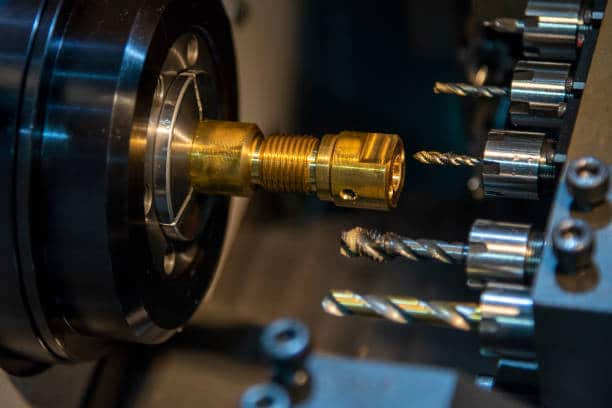
In automatic Swiss screw machining, tool holders are positioned radially around the spindle, while the tailstock aligns coaxially with it. This setup allows the machine to mass-produce small, high-precision parts at high speed.
Disc cams control tool positioning and headstock movement to compensate for variations in the workpiece’s alignment. The tight spindle collets reduce debris deflection, ensuring the machining head glides smoothly without obstruction.
Swiss CNC Machining
Swiss CNC machining enhances precision and productivity through computer numerical control. It enables multiple tools to perform cutting operations simultaneously, increasing throughput and maintaining consistent accuracy.
Compared with traditional “single spindle” setups, Swiss CNC machining supports more tooling fixtures and even dual spindles, which allow for complex, multi-operation processes in a single cycle. Once programmed, these machines can run with minimal supervision, making them ideal for long-term, high-volume projects.
Both automatic and CNC types are cost-effective, reliable, and capable of continuous operation. The tight fit among the collet, substrate, and tooling ensures ultra-precise machining across every production cycle.
What Makes Swiss Screw Machining Unique?
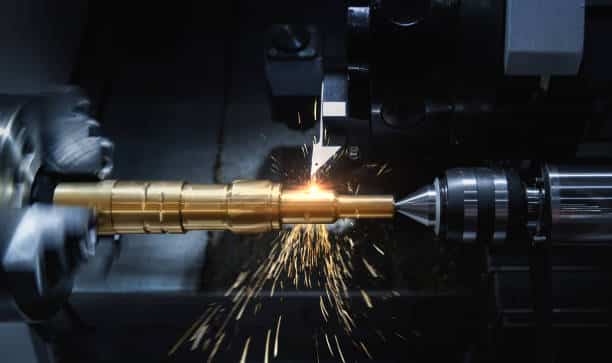
Originally developed by Swiss watchmakers, Swiss screw machining was designed to achieve unparalleled precision for miniature parts. The process involves mounting the workpiece on a rotating slide, which moves axially while the cutting tools remain stationary—allowing for detailed features to be formed along the part’s entire length.
Key features of Swiss screw machining include:
- Micrometer-adjustable tool holders for ultra-fine tuning
- Rigid, compact structure for stability and accuracy
- Exceptionally short cycle times
- Ability to move the workpiece axially for intricate geometries
- High precision output ideal for micro-components
Benefits Over Conventional Lathe Machining
The greatest advantage of Swiss screw machining lies in its unmatched precision. It can maintain tolerances as tight as ±0.0002 inches at speeds of up to 10,000 RPM—far exceeding what most conventional CNC lathes can achieve.
Other benefits include:
- Seamless transition between multiple tools in under one second
- Up to five tools operating simultaneously, reducing cycle time by half
- Capability to hold up to 20 tools for complex part geometries
- Excellent surface finishes with minimal post-processing
- Compatible with milling, drilling, and threading operations
- Short setup times and minimal operator supervision
- High cost-efficiency for long production runs
What are the Products Made Using Swiss Screw Machining?
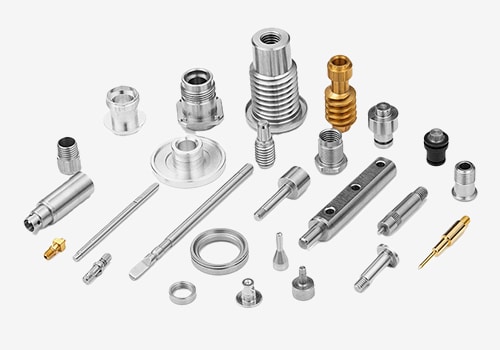
Despite the name, Swiss screw machining produces far more than just screws. It supports the manufacturing of a broad range of components across industries through both mechanical and Swiss CNC machining methods.
Common Swiss screw machined parts include:
- Splines and spindles
- Fittings and keyways
- Threaded rods and fasteners
- Metal knobs and tire gauges
- Miniature medical instruments
- Custom bio-implants and surgical components
What are Its Uses and Applications?
Today, Swiss CNC machining is widely used to produce high-precision components across numerous industries, including:
- Medical: Surgical tools, orthopedic pins, and implants
- Aerospace: Flight control components and sensors
- Military: Firearm and defense-grade mechanical parts
- Automotive: Engine, transmission, and connector components
- Electronics: Connectors, contacts, and miniature fittings
- Agriculture and Hydraulics: Fluid connectors and valves
- Construction and Energy Equipment: High-strength metal fittings
- Musical Instruments: Precision screws and shafts
The automotive sector, in particular, benefits from Swiss screw machining’s ability to produce thousands of uniform components daily with tight tolerances and minimal waste. Similarly, the electronics and medical industries rely on its accuracy for small, intricate parts where precision is critical.
Work with Ancastings – Your Swiss CNC Machining Partner
We are the most dependable manufacturer in the business when it comes to producing Swiss Screw parts, so come to us if you are seeking one. Because of the technology that underpins our platform, we are able to maintain uninterrupted operation around the clock, seven days a week. Even after our workers have left for the day, our sophisticated Swiss Screw machines will continue to operate, manufacturing the components that you want on schedule and without exceeding the allotted budget. Get an instant quote to start your project today!
Learn more about our Swiss CNC machining capability.
Other Articles You May be Interested in:
Difference Between Chrome Plating, Zinc Plating, and Nickel Plating
Top 10 Strongest Metal in the World