
“Aluminum is a top choice in manufacturing due to its lightweight nature, high strength-to-weight ratio, and corrosion resistance. Manufacturers create aluminum parts through different processes such as aluminum extrusion, casting, sheet fabrication, and machining. Here, each technique offers unique benefits for shaping and customizing aluminum components. “
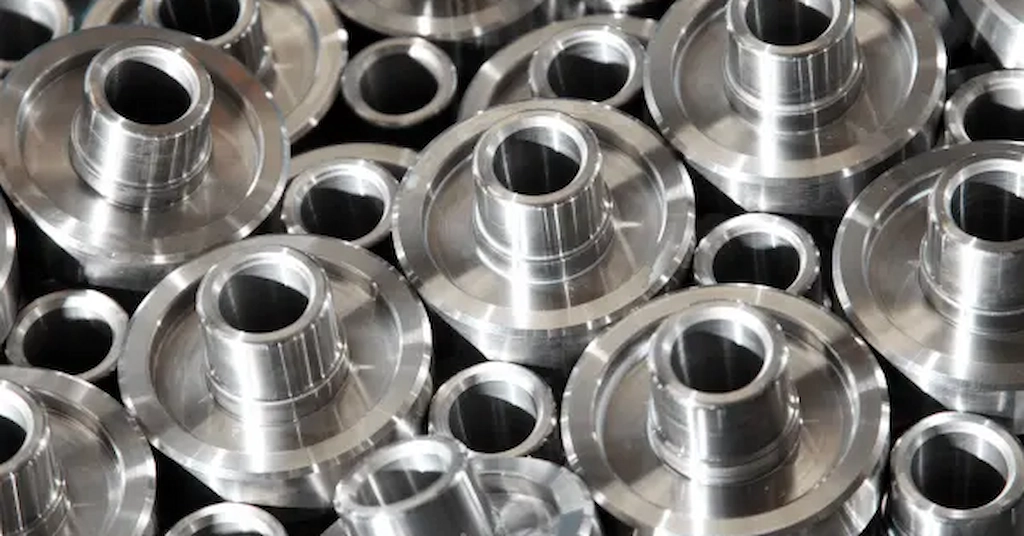
Metals and their diverse compositions (alloys) are the first choices in various manufacturing projects, and Aluminum is one of them. It is the most prevalent metal in manufacturing after stainless steel and iron. The lightweight, excellent mechanical strength, fatigue life, and superior corrosion resistance make it suitable for different mechanical parts, systems, and equipment. However, there are Different Ways to Make Aluminum Parts.
If you want to know how to make aluminum parts, keep reading. We will briefly discuss how to fabricate aluminum parts in an intended shape: CNC machining, sheet metal fabrication, aluminum extrusion, molding, and forging.
1. Traditional or CNC Machining
Traditional machining of Aluminum (bar or block) involves using manual machining- tools & equipment like lathes, mills, or drills to shape the workpiece into the intended form. Traditional or manual machining of Aluminum is often used for small-scale production or prototyping.
One of the benefits of traditional machining is its versatility. Because of manual tools, a wide range of materials, shapes, and sizes can be machined. It is often less expensive than CNC machining, as it does not require specialized computer-controlled machines.
Due to significant human intervention, traditional machining approaches are usually labor-intensive and less precise. Therefore, CNC (Computer Numerical Control) machining is preferred for accuracy, time, and complexity.
Related: What is manual sheet metal processing Definition & Forming?
CNC Machining of Aluminium
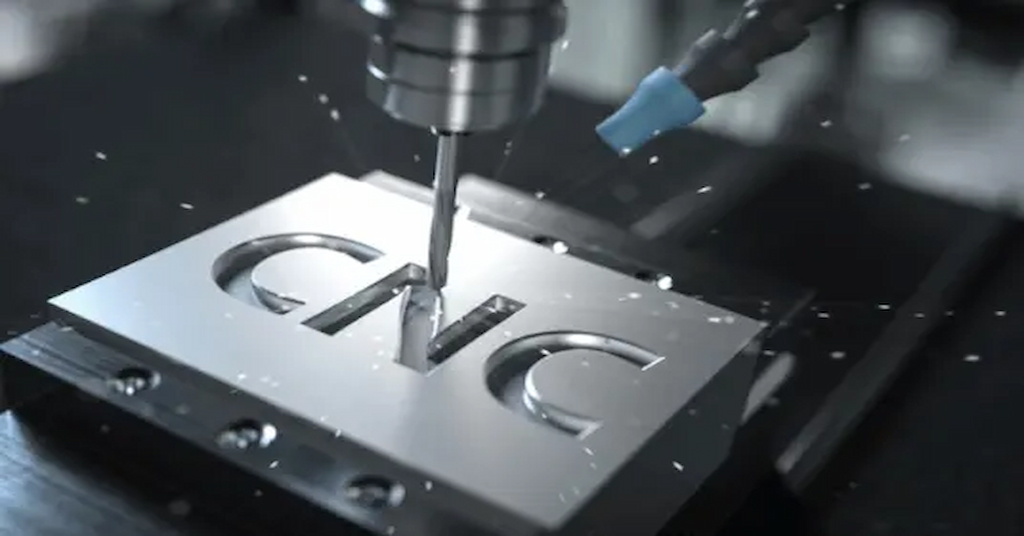
CNC machining of Aluminium
CNC machining uses computer-controlled machines to cut and shape aluminum bars, blocks or even billets into the desired shape. It is an efficient and precise method often used for high-volume production runs, tight tolerances, and complex designs.
CNC Machining Service
In aluminum CNC machining, the aluminum workpiece is mounted onto a machine, and a cutting tool (drill or end mill) removes material from the outer surface. The removal process is repeated by dictating cutting tool movement through the computer program. The machine follows the program’s instructions to conduct the machining operations accurately and consistently until aluminum parts gain the required shape.
- It allows high production speed for aluminum parts compared to stainless steel, iron, and alloy steels.
- CNC machining fabrication offers an excellent as-machined surface finish using appropriate coolants and feed direction. However, different surface finishing techniques can be applied to customize the roughness to the desired level.
- CNC machining is highly consistent. It creates aluminum parts with the exact dimensions and features, which is especially important in high-volume production runs.
- It can produce complex geometries from raw Aluminum, such as curved and angled shapes.
Related: A Definitive Guide on How to Make Anodized Aluminum
2. Sheet Metal Fabrication
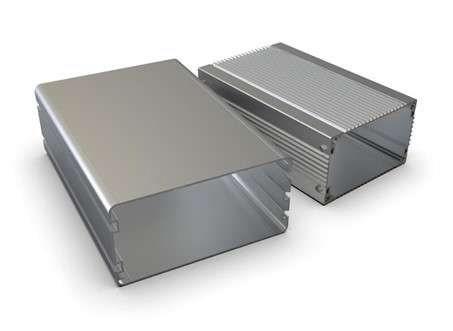
Sheet metal fabrication is another efficient and precise way to make aluminum parts. To make aluminum parts using sheet metal fabrication, a metal sheet is first cut to the desired size and shape. This can be done using various techniques, such as shear, laser, plasma, or water jet.
Related:
- The Basics of Sheet Metal Fabrication
- Which cutting method is better – plasma or laser? Ultimate Guide 2022
After cutting, the metal sheet is subjected to different fabrication approaches, such as bending, punching, stamping, and joining. The selection of operations and sequences depends on the complexity of the design.
How do you make aluminum RC parts?
Aluminum RC parts are used in remote-controlled vehicles like cars, airplanes, and boats. The process of making these parts is similar to that of making any other aluminum part.
The metal sheet is cut into small pieces and shaped using fabrication techniques. Ensuring that the Aluminum RC parts are solid and lightweight is essential, as this will affect the overall performance.
Sheet Metal Service
3. Extrusion is an Excellent Way to Create Aluminum Billet Parts.
If you are unaware of the process, how do you make billet Aluminum parts, or what is aluminum extrusion? It involves heating Aluminum to a temperature where it becomes malleable and forcing it through a die to create the desired shape. Usually, it is heated in a range of 375 to 500°C, depending on the intended application (Extrusion Processes, 2010).
- The billet is inserted into the extrusion press, which consists of a ram, a container, and a die.
- The ram applies pressure to the billet, forcing it through the die and creating the parts the same way as the die’s geometry (cylindrical, square bar, round, or any shape).
- The extruded Aluminum is then cooled and cut to the desired length.
- The surface of the extruded aluminum part can be treated with various methods, such as anodizing, to enhance its appearance and improve its corrosion resistance.
Aluminum CNC Machining
4. Aluminum Molding and Casting
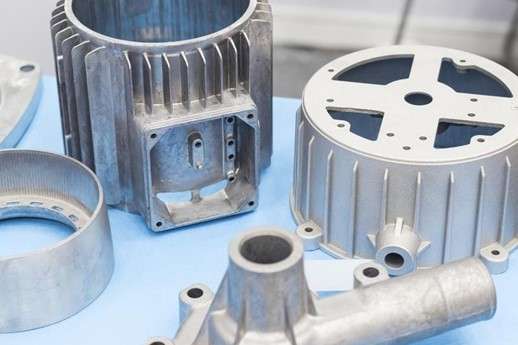
Casted parts of Aluminum
Aluminum molding and casting are other common ways to create aluminum parts. In this process, Aluminum is melted and poured into a mold, which cools and solidifies into the desired shape.
Sand casting process
To make a sand-casting mold for aluminum parts, you can use various materials, including sand, plastic, metal, and silicone. The choice of material will depend on the size, complexity of the part, intended use, and production volume. Additionally, you need a pattern of the desired part and a mold box for making the mold.
One important consideration when making aluminum parts is to determine how much bigger to make the part of the aluminum cast. This is because Aluminum shrinks as it cools, so the mold should be slightly larger to compensate for this shrinkage.
Aluminum parts from sand casting create a rougher surface. It requires post-processing to smooth the surface, such as sandblasting, powder coating, grinding, or other surface finishing techniques.
Injection molding
Injection molding is quite similar to other casting methods. The main difference is that it involves melting the Aluminum and injecting it into a mold under high pressure. The Aluminum then cools and solidifies into the desired shape.
It is a highly automated process that can produce complex, high-precision aluminum parts with tight tolerances. It is ideal for creating parts with intricate shapes and features, such as electrical components or small mechanical parts. However, it is not cost-effective for low-volume production since it demands significant mold design and manufacturing investment.
5. Forging Method
Forging is one approach to fabricating aluminum parts. It uses high pressure to shape the aluminum workpiece. Several forging techniques include hammer forging, press forging, and roll forging.
Forging aluminum parts allows for producing components with high strength and dimensional stability. This is because the metal is exposed to intense pressure, straightening the grains and enhancing mechanical properties.
However, forging aluminum parts can be time-consuming and costly, particularly for large manufacturing numbers.
Additionally, it calls for specialized tools, a thorough understanding of the forging procedure, and the properties of the particular aluminum alloy.
Why Choose Ancastings for Aluminum Parts?
We discussed different ways to make aluminum parts, although CNC machining and sheet metal fabrication are the most precise and effective solutions in aluminum fabrication.
Ancastings is an ISO 9001-certified manufacturing company with experience creating precise aluminum parts or products.
- Our team has a decade of experience and expertise in CNC and sheet metal fabrication. We have the knowledge and skills to produce high-quality aluminum parts and products that meet your needs and requirements.
- We use cutting-edge CNC & sheet metal technologies to produce parts and products with high accuracy and consistency, even for complex shapes and designs.
- We take quality seriously and have strict quality control procedures to ensure that every part and product meets our high standards of excellence.
- We are very flexible regarding production volume, and we can provide any number you want.
- We offer competitive pricing for our CNC and sheet metal fabrication services, enabling us to provide high-quality aluminum parts and products within your budget.
- We strive to complete projects as quickly as possible without sacrificing quality. Our fast turnaround time lets you get your aluminum parts and products sooner.
- We offer customization options (custom aluminum parts) according to what you need for your specific application or use case.
Summing Up
Different ways to make aluminum parts include CNC machining, sheet metal fabrication, casting, molding, extrusion, and forging. However, CNC and sheet metal operations are the most popular and efficient approaches.
Ancastings is an experienced and dedicated manufacturer of aluminum parts for various industries or applications, including automotive, aerospace, medical, machining and tooling, agriculture, robotics, and custom parts.
Therefore, choosing us means getting high-quality, accurate, cost-effective solutions that meet your needs and requirements. Contact us to learn details about our services and how we can help you with your project.
FAQ’s
Why are CNC and sheet metal operations the most popular among others?
CNC and sheet metal offer precision, complexity, and cost-effectiveness and are suitable for any production volume.
How do you make a mold for aluminum parts?
To make a mold for aluminum parts, you need a pattern or model of the desired part, a mold box, molding materials such as sand or plastic, and a method for making the mold, such as casting, injection molding, or vacuum forming.
How can aluminum engine parts be made look new?
Aluminum engine parts can be made to look new by cleaning and polishing the surface using methods like sanding, buffing, or metal polish.