
“Aluminum die casting transforms molten aluminum into intricate designs with exceptional accuracy. It enables the production of lightweight and robust parts essential for automotive, aerospace, and electronics industries.”
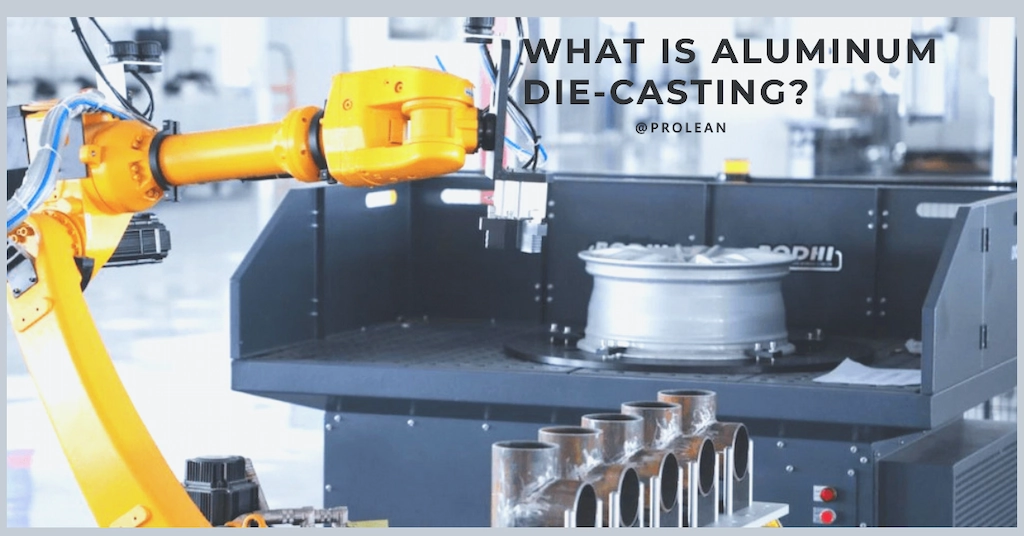
Transforming raw aluminum into functional components or products has several manufacturing choices, and die-casting is one of them. But, What is Aluminum Die-casting? This process molds aluminum under high pressure into complex shapes with precision, crucial for industries requiring lightweight, durable components.
The casting process can also make aluminum parts with diverse thicknesses, including thin walls. Meanwhile, you have many alloy choices to cast. So, the final casting aluminum components can meet your needs. This article discusses the nuances of the aluminum die-casting process, its benefits, and why Ancastings’ services lead the market.
What is Aluminum Die-casting?
It is a highly efficient manufacturing process. It involves forcing molten aluminum into a mold cavity under high pressure. This method is known for its speed and precision. As a result, it produces components with complex shapes and fine details. The parts have excellent surface finish and dimensional accuracy.
Moreover, the process is versatile and suits applications, from automotive parts to electronics housings. The bend of lightweight nature and the strength provided by die casting enhances product performance. Consequently, this leads to innovations in design and functionality. The die casting itself can work with different aluminum alloys to customize the properties. This adaptability ensures the final product meets specific requirements.
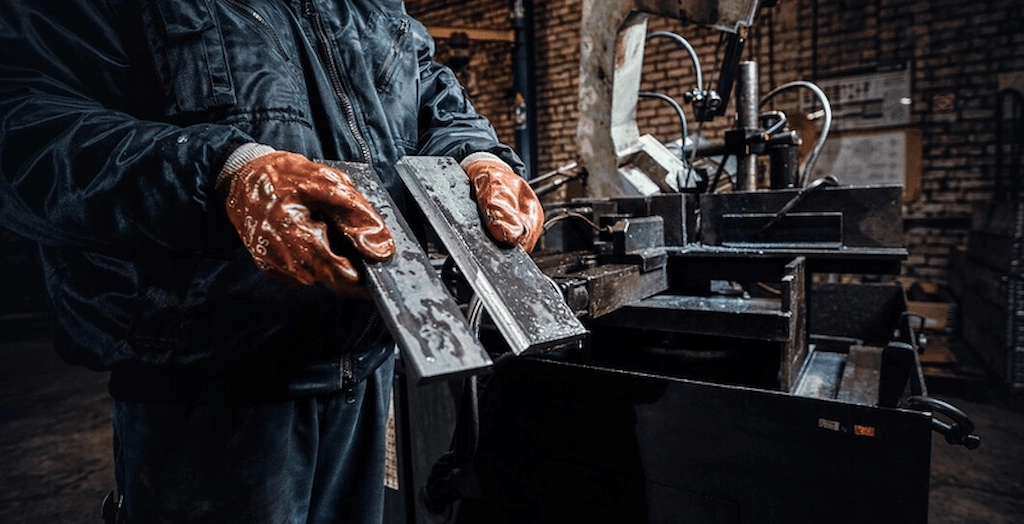 Aluminum die casting
Finally, aluminum die casting is cost-effective for high-volume production. The molds used can withstand thousands of cycles. This durability lowers the per-unit cost significantly. Additionally, aluminum’s excellent thermal conductivity and corrosion resistance extend the life of the products. Thus, this process facilitates manufacturing efficiency and precise lightweight parts.
Related: What is Die Casting? Die Casting Process and Overview
Try Ancastings Now!
The Aluminum Die-casting Process: Step by Step
This process involves several key steps, each contributing to the meeting of exact specifications. The process starts with mold creation. Meanwhile, this mold can produce thousands of castings rapidly.
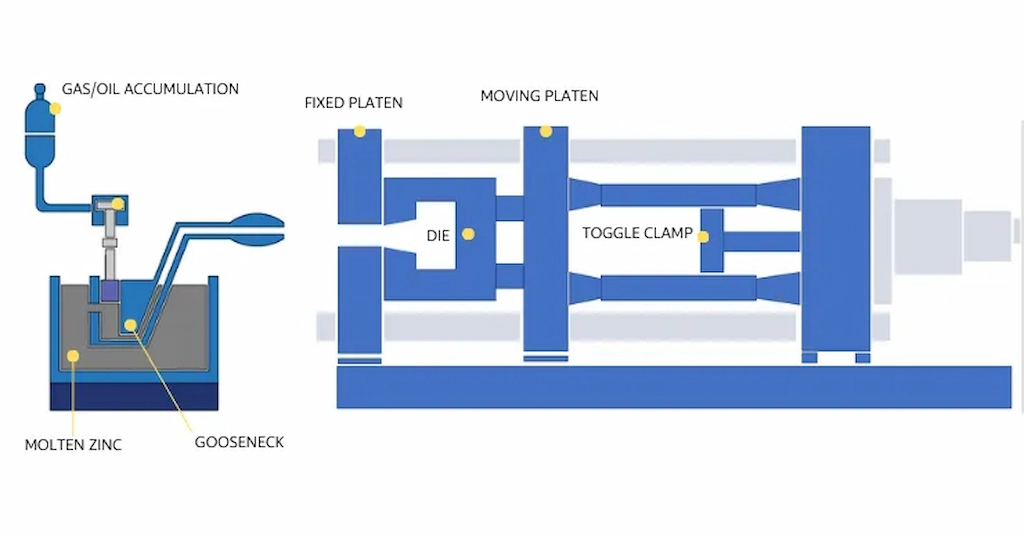 Aluminum die-casting machine
These molds can be opened and closed to inject the molten aluminum and eject the final product. The cycle begins with the die halves clamped tightly together, followed by the injection of molten aluminum, which then solidifies quickly.
Step 1: Die Preparation and Clamping
The first step in the aluminum die-casting process is preparing and clamping the two halves of the die. The die is typically steel-made, which includes two halves to allow for the removal of the finished casting. Next, the secure mold mounting in the casting machine(one-half stationary and the other movable) prepares for the next step.
Step 2: Molten Aluminum Injection
The aluminum, melted in a separate furnace, is ladled into the cold chamber of the casting machine. Here, the Cold Chamber Die Casting is suitable to prevent damage to the machine. The molten aluminum is then injected under high pressure into the die cavity, where it quickly solidifies.
Step 3: Cooling and Solidification
The next step is cooling and solidification. This phase is crucial as it determines the final properties of the cast part. The molten aluminum begins to cool immediately upon contact with the die’s inner surfaces, solidifying into the shape of the cavity. The cooling time control is crucial to ensure the aluminum solidifies evenly and prevents defects such as warping or internal porosities.
Step 4: Ejection of the Casting Aluminum Part
Once the aluminum has solidified, the final step in the die-casting process is the ejection of the casting. Here, part injection involves hydraulic cylinders or other mechanisms for precise movement.
The solidified aluminum part is then ejected from the die cavity, usually assisted by ejector pins integrated into the die design.
Step 5: Trimming and Finishing
After ejection, it often undergoes trimming and finishing to remove excess material and improve its appearance. It may include cutting off the sprue, flash, or other unwanted parts. Then, finishing techniques, such as sanding or polishing are applied to achieve the desired surface finish. This step is crucial for ensuring the part meets all specifications and is ready for use in its intended application.
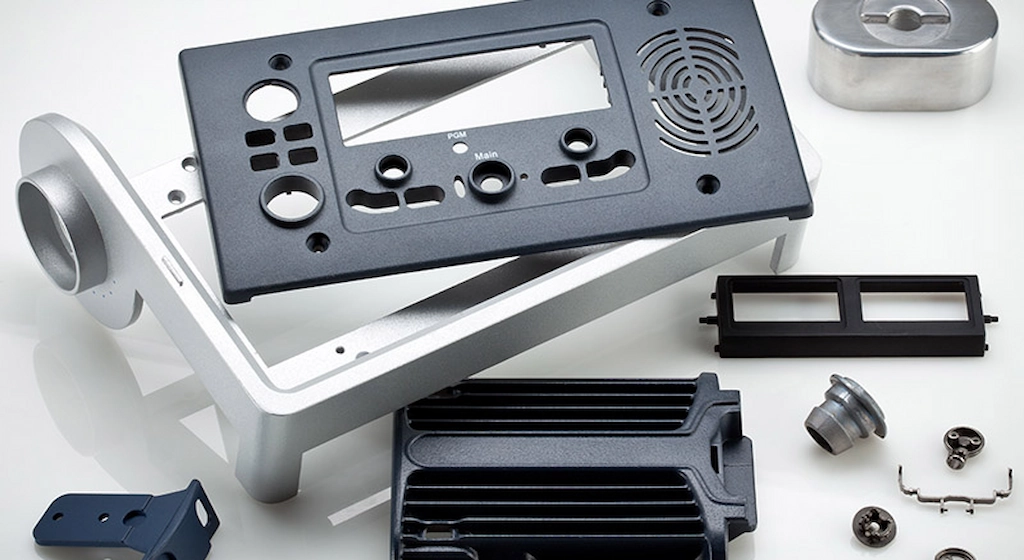
Finished aluminum die-casting part
Overall, It is essential to follow a technical path from the design stage to the manufacturing stage to reduce casting defects. At earlier stages, avoid taking deviations and avoid complexity at a later stage. Source
The Aluminum Die Casting Mold
The aluminum die casting mold is an essential tool in the casting process. It is a custom-shaped cavity where a die-casting machine injects the molten aluminum under high pressure. Furthermore, this mold defines the precise geometry, texture, and dimensional tolerances.
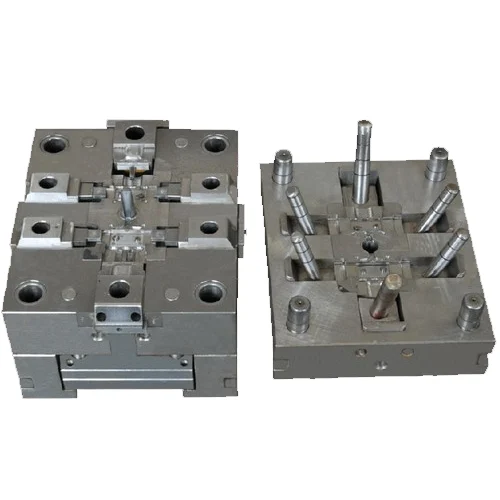
Aluminum die casting mold
Next, high-grade steel is the right choice for aluminum die casting mold. Steel grades such as H13, A2, and D2 can withstand extreme die-casting conditions, including high temperatures and repeated cycles of injection and cooling. Meanwhile, mold design complexity can range from simple geometric shapes to intricate structures with moving parts and cores. CNC Machining techniques and EDM are the two ways to create the mold for aluminum casting. For example, CNC milling turning combined with EDM makes a precise and intricate mold.
Functionally, the mold plays a critical role in the die casting process. It not only shapes the molten aluminum into the desired form but also significantly influences the quality, strength, and surface finish. Furthermore, the mold’s design includes systems for the efficient ejection of the cast part and channels for excess material removal.
What are the Die Cast Aluminum Alloys?
Aluminum alloys provide versatility, durability, and unique properties to specific characteristics and applications. For example, Alloy 380.0 is the most commonly used due to its excellent balance of mechanical properties and castability. However, other alloys such as 360, 390, and 413 also play crucial roles in meeting various industrial needs.
380 Alloy
The 380 alloy offers good mechanical properties, excellent fluidity, and ease of casting. This makes it exceptionally versatile for a wide range of applications. Its balanced composition ensures that it makes complex shapes with high dimensional accuracy. The alloy’s durability and ability to withstand high temperatures make it ideal for components in the automotive, electronics, and household goods industries.
360 Alloy
Alloy 360 provides superior corrosion resistance and strength compared to other aluminum alloys. Its composition provides a good balance between castability and mechanical properties. Consequently, alloy 360 is particularly used for its pressure tightness and resistance to atmospheric corrosion. So, this makes it a preferred choice for medical devices, marine parts, and any application requiring long-term durability in harsh environments.
390 Alloy
The 390 alloy is ideal for applications requiring exceptional wear resistance and high hardness. It’s known for its use in automotive engine components, like transmission cases and engine blocks.
Although its flexibility is lower than other aluminum alloys, its performance under stress and its resistance to wear and tear make it a standout choice for heavy-duty applications.
413 Alloy
The excellent fluidity and pressure tightness of alloy 413 make it an ideal choice for intricate castings that require fine detail. This alloy is popular in casting applications where complex geometries or thin walls are necessary.
Furthermore, its ability to fill intricate dies without defects and maintain high dimensional stability after casting makes it valuable for electrical components, decorative items, and detailed mechanical parts.
ADC-12
ADC-12 is another aluminum die casting alloy renowned for excellent mechanical properties, castability, and thermal conductivity. Subsequently, casting of this aluminum alloy can achieve high levels of detail and surface finish.
For all these reasons, it is suitable for consumer electronics, automotive components, and other applications where aesthetics and performance are critical.
Try Ancastings Now!
Advantages of Aluminum Die Casting
- Aluminum die casting creates complex shapes with tight tolerances and excellent dimensional stability.
- Aluminum parts from die casting can achieve smooth surfaces, reducing the need for additional surface treatment.
- Aluminum die-cast parts offer a remarkable strength-to-weight ratio.
- The process supports high-volume manufacturing with quick cycle time.
- The reusable molds and the ability to produce numerous parts reduce the per-unit cost.
- Aluminum’s excellent thermal properties make die-cast parts ideal for heat dissipation applications like heat sinks.
Disadvantages of Aluminum Die Casting
- The cost of designing and producing the steel molds for aluminum die casting can be high, making it less economical for small production runs.
- While aluminum die casting is excellent for producing complex shapes, there is a limitation on the minimum wall thickness.
- The process can introduce porosity into the cast parts that might affect their structural integrity and strength.
- Not all aluminum alloys are suitable for die casting, which can limit the choice of materials.
What are the Aluminium Die-Casting Products?
The versatility of aluminum die casting has made it indispensable across various industries. It’s the material of choice for diverse products with its superior strength-to-weight ratio, corrosion resistance, and excellent thermal properties.
- Automotive engine blocks, pistons, and transmission cases.
- Vehicle body parts, such as door frames, chassis parts, and wheel spacers.
- EV battery housings
- Aerospace engine pistons
- Fuel injectors and pumps
- Electronic enclosures
- Heat Sinks for electronic devices, from computers to LED lights.
- Networking hardware, such as racks, enclosures, and chassis for telecommunications equipment.
- Mobile phone structural components in smartphones and tablets.
- Surgical instruments
- Hospital furniture:
Aluminum Die Casting Mold Design: Tips and Considerations
Designing molds for aluminum die casting is a complex process that significantly impacts efficiency, cost, and quality. Here, the Design for Manufacturing (DFM) concept plays a crucial role. DFM emphasizes mold design optimization to streamline production and minimize costs without compromising quality.
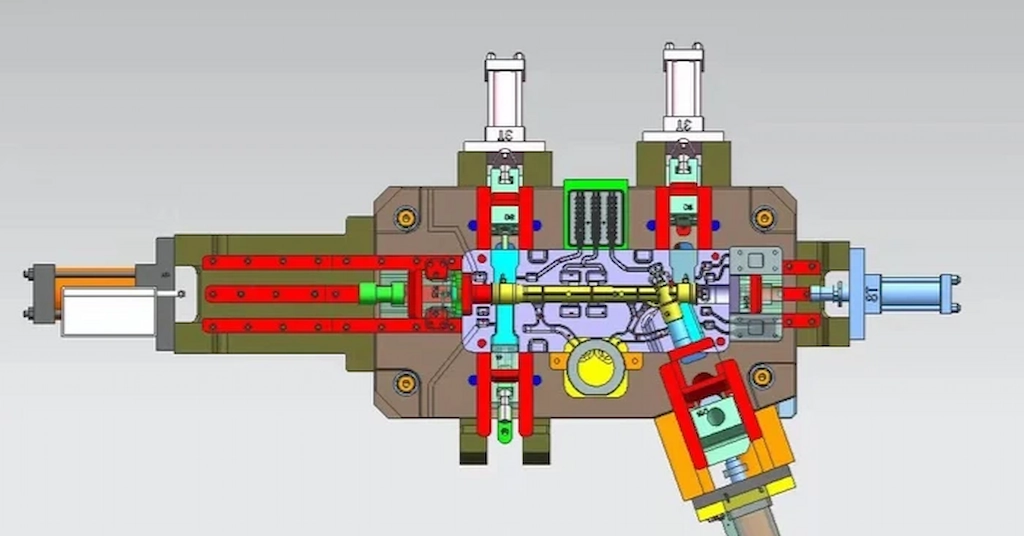
Die casting mold design for aluminum parts
Here are the die casting mold design considerations:
- Parting Line Consideration: The strategic placement of the parting line impacts the functionality and aesthetics. It’s crucial for minimizing flash and ensuring a high-quality finish.
- Managing Shrinkage: Shrinkage is a natural occurrence in die casting that must be precisely accounted for to ensure accurate dimensions. Incorporating drafts can mitigate shrinkage effects, particularly around internal features, ensuring smooth ejection and high production quality.
- Drafts Are Essential: Drafts facilitate the ejection of parts from molds, preventing adherence and potential damage. Varying the draft angle according to internal and external mold features is critical for a streamlined casting process.
- Uniform Wall Thickness: Maintaining uniform wall- thickness is critical for consistent metal flow and solidification. So, aim for uniformity to improve quality and performance.
- Incorporating Fillets and Radii: Fillets and radii at surface junctures improve molten aluminum flow, reduce stress concentrations, and minimize turbulence.
- Designing with Bosses and Ribs: Strategic placement and dimensioning of bosses and ribs enhance part strength and functionality without unnecessary material use. These features are integral for maintaining uniform wall thickness and optimizing part performance and manufacturing efficiency.
Low Pressure vs High Pressure Aluminum Die Casting
High pressure is most common for aluminum die casting. It involves injecting molten aluminum into the mold at high pressure( from 1,000 to 20,000 psi). This high pressure die casting ensures the molten metal fills all mold details. Subsequently, High-pressure aluminum casting is ideal for creating complex shapes and thin-walled parts in large volumes.
In contrast, low pressure die casting is rare with aluminum alloys. In some cases, casting aluminum wheels and automotive components might involve low-pressure casting for aluminum components.
Try Ancastings Now!
Hot vs Cold Chmaber Die Casting for Aluminum Parts
Aluminum die casting manufacturers prefer Cold Chamber method for aluminum parts or products. In this process, molten aluminum is ladled into a “cold chamber,” or injection cylinder, and then forced into the die cavity by a hydraulic or mechanical piston. Next, the molten metal source separation from the injector components minimizes damage to the equipment. So, it is ideal for higher melting points and the corrosive nature of aluminum alloys.
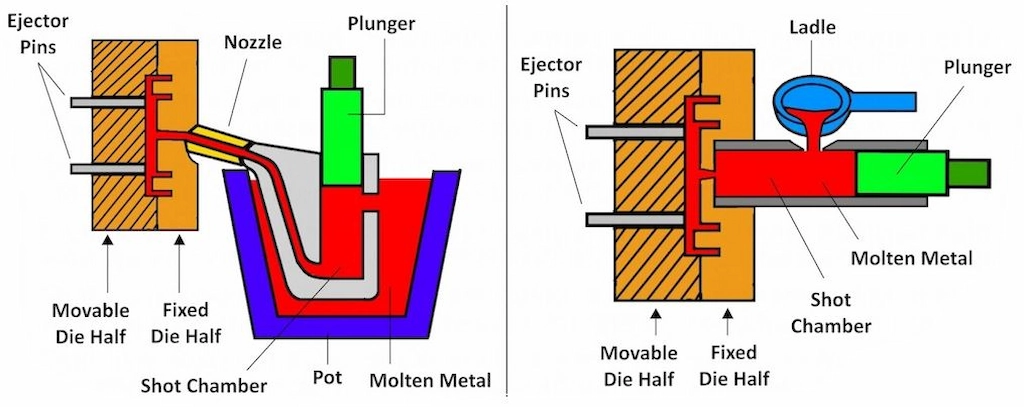
Hot chamber vs Cold chamber die casting
On the other hand, Hot Chamber Die Casting is generally not used for aluminum. It involves a piston that immerses directly into the molten metal to fill the mold. Hot chamber casting is mainly suitable for metals with lower melting points, such as zinc and magnesium.
What are the Surface Finishing Options for Aluminum Die Casting Products?
The surface finishing techniques enhance the appearance, durability, and resistance to corrosion of the final product. Moreover, these finishing processes not only improve the aesthetic appeal of the products but also extend their lifespan by providing a protective layer against environmental factors.
Additionally, surface finishing can add functional characteristics, such as improved electrical conductivity or wear resistance. It makes aluminum die cast parts versatile in their applications. However, the choice of surface finishing depends on the intended use, cost considerations, and desired aesthetic qualities.
Here are some typical surface finishes for die-cast aluminum parts;
- Powder Coating: It provides a durable, wear-resistant finish in countless colors, enhancing appearance and corrosion resistance.
- Anodizing: It offers improved corrosion resistance, surface hardness, and wear resistance, with the added benefit of color customization.
- Electroplating: This technique applies various metals to the casting part surface with electrolysos, including zinc, nickel, or chrome. It enhances corrosion protection and aesthetic appeal.
- Polishing: This finish creates a smooth, reflective surface, improving the aesthetic appeal and resistance to tarnishing.
- Bead Blasting: It involves propelling a stream of abrasive material against the surface, resulting in a uniform matte finish that can improve paint adhesion.
- Chromate Conversion Coating: Chromate finish provides corrosion resistance, maintains electrical conductivity, and serves as a primer for additional coatings.
- Passivation: Enhances the natural oxide layer’s thickness, improving corrosion resistance without affecting the part’s dimensions.
We Manufacture Your Aluminum Parts with Our Advanced Die Casting Facilities
At Ancastings, we have advanced die-casting facilities equipped with the latest technology and machinery. Our experienced engineers leverage these facilities to manufacture aluminum parts with unparalleled precision and efficiency. Our expertise in high-pressure die casting techniques ensures that every component we produce meets the highest standards of quality and accuracy.
Moreover, our aluminum die casting services can handle a diverse aluminum alloy to cater to diverse industry needs while providing low-cost yet precise casting solutions. Our focus on low-cost yet precise casting die-casting solutions can address your casting needs!
Read more:
- Revolutionizing Die Casting with Xiaomi’s Super Large Die Casting Technology
- What is Squeeze Casting: A Simple Guide
- What is Investment Casting? Process and Materials
Try Ancastings Now!
Summing Up
The die casting method utilizes reusable molds to cast aluminum alloys, making it cost-effective for medium-volume to mass production. It can serve industries from automotive to electronics with countless applications. Subsequently, the process ensures durability & strength in products and supports design complexity and efficiency. Moreover, grasping what is aluminum die casting helps you choose the right alloy and optimize the quality and cost.
FAQs
What is aluminum die-casting?
Aluminum die-casting is a metal casting process that forces molten aluminum into a mold cavity under high pressure.
Why use aluminum for die casting?
Aluminum is lightweight, strong, and has excellent thermal conductivity, making it ideal for many applications.
Can aluminum die casting achieve complex designs?
Yes! It can achieve complex shapes with high precision and minimal machining.
How does aluminum pressure die casting differ from other methods?
It involves injecting aluminum into the mold under high pressure, resulting in superior dimensional accuracy and finish.
Why choose Ancastings for aluminum die casting?
Ancastings offers advanced die casting solutions focusing on quality, efficiency, cost-effectiveness, and customizability.
Resources
- Karve, A. A. (1998). Dimensional control of die castings [Doctoral dissertation, The Pennsylvania State University]. ProQuest Dissertations Publishing. (No. 9901047). Retrieved from https://www.proquest.com/docview/304466613
- Shukla, S. (2020). Study of porosity defect in aluminum die castings and its evaluation and control for automotive applications. International Research Journal of Engineering and Technology (IRJET), 7(7), 2122. https://www.irjet.net/archives/V7/i7/IRJET-V7I7274.pdf