
Plain milling stands out as a go‐to method when manufacturers need flat and accurate surfaces. They mostly use it to make machine bases, panels or to quickly remove extra material. Unlike other milling techniques, plain milling offers both speed and adaptability across a range of alloys and metals. Many industrial fields rely on it for these reasons.
In this blog post we will cover the basics of plain milling, the tools it uses and the main advantages it provides.
What Is Plain Milling
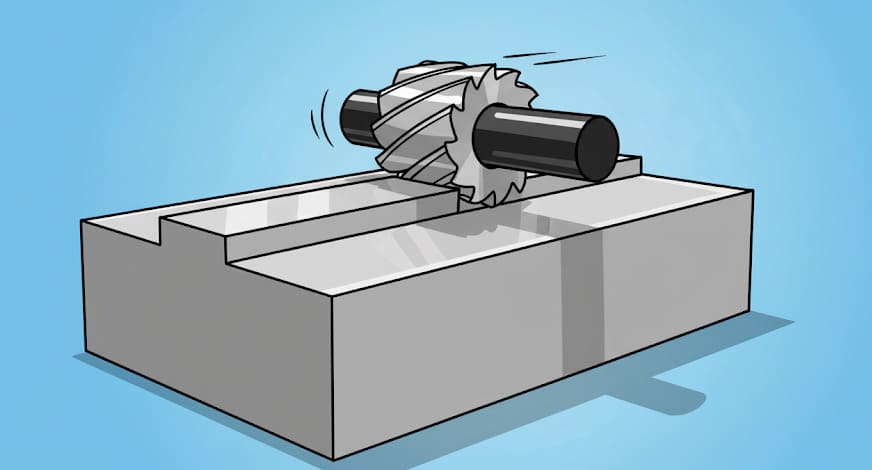
Plain milling, sometimes called slab or surface milling, is a fundamental machining process. It creates flat surfaces on a workpiece. The cutting tool spins on an axis that runs parallel to the surface being worked on. With this setup, the cutter’s peripheral teeth remove material proficiently.
Why Use Plain Milling
Plain milling serves a lot of roles in manufacturing:
- Surface Finishing: It delivers flat, smooth surfaces with tolerances as close as ±0.01 mm for precise work
- Material Removal: Cuts away large amounts of material quickly and thus provides high rates of removal
- Trimming: Cuts off extra material to achieve exact sizes
- Slotting: Makes slots or grooves in parts for assembly needs
- Preparation for Further Machining: Forms reference surfaces for later steps like drilling or tapping
Plain Milling Process
Plain milling has a step‐by‐step approach that separates the process into three main stages.
Preparation
The first step is to secure the workpiece tightly to the machine table. Operators use a vise, clamps or an angle plate to prevent any movement during cutting.
Next, they align the component so its surface matches the cutter’s axis.
After alignment, the right cutter is selected. The choice depends on the material and whether the job calls for roughing or a fine surface finish.
Machining
After setup, the operator sets the feed rate, cutting speed and depth of cut. The machine is then started. The cutter moves horizontally across the workpiece and removes material from its surface. For heavy cuts, horizontal milling machines are often used. Vertical mills are chosen when better visibility is needed. CNC mills can handle these steps automatically which increases both precision & repeatability.
Finishing
Once machining ends, the component is checked for flatness and surface quality. To measure accurately, the workpiece is placed on a granite surface plate. A dial indicator sweeps the surface to find any uneven spots. A CMM can also check flatness by probing several points. If the part does not meet tolerance requirements, the setup is corrected and a final finishing pass is made.
Cutting Parameters and Tool Selection for Plain Milling
1. Cutting Parameters
The right settings control how well material is removed. You should adjust these parameters based on your machine and the workpiece. Doing so helps avoid problems like too much heat or unwanted vibration.
Cutting Speed
Cutting speed measures how fast the tool’s cutting edge moves compared to the workpiece. This setting affects both tool life and heat buildup. For best performance, choose a speed that matches the workpiece material.
Feed Rate
Feed rate shows how quickly the workpiece moves toward the cutter. It has a direct impact on chip formation and the quality of the surface finish. To get smooth results, balance the feed rate with the cutting speed.
Depth of Cut
Depth of cut tells you how thick a layer of material is removed in one pass. Use shallow cuts for finishing steps. Deeper cuts take away more material but also increase the force on the tool.
The table below lists starting values for different materials. You can use it to pick suitable parameters quickly.
| Material | Optimal Cutting Speed (m/min) | Optimal Feed Rate (mm/min) | Optimal Depth of Cut (mm) |
|---|---|---|---|
| Aluminum | 200‐400 | 300‐500 | 0.5‐6 |
| Mild Steel | 80‐150 | 200‐400 | 0.5‐6 |
| Titanium | 30‐70 | 80‐150 | 0.5‐6 |
Note: These values are only starting points for plain milling. You may need to change them depending on the rigidity of your machine, the tool material or if you use coolant.
At ANCASTINGS, our engineers fine‐tune these settings for each material grade and part design. This approach lowers tool wear and improves the surface finish.
2. Tool Selection
Choice of right cutter matters as much as setting the correct cutting parameters. A proper tool makes cutting proficient and helps achieve the required surface finish.
Material
Manufacturers mostly make cutters from carbide or HSS. HSS works well for most general uses. In contrast carbide lasts longer and handles harder materials better.
Tool Geometry
The geometry of a cutter affects the quality of the surface as well as how well it removes material. Cutters with more teeth give smoother finishes and are suited to finishing tasks. For roughing, tools with fewer teeth and a helix angle between 25° and 45° remove chips more effectively.
Coating
Coatings like TiN or TiAlN make tools harder and more heat resistant. These coatings help tools last longer, particularly when cutting tough materials at high speeds.
3. 3 Major Types of Plain Milling Cutters
Light Duty Cutters
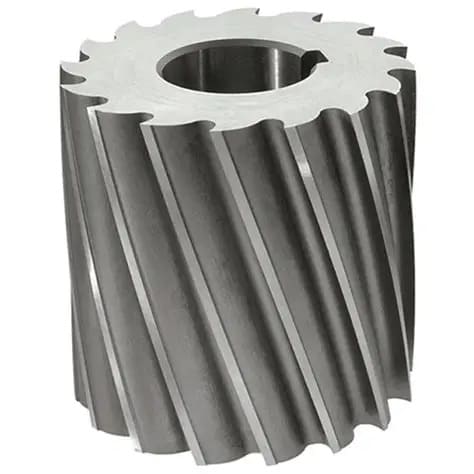
Light‐duty cutters usually have 14 to 20 teeth and a helix angle below 25°. They work best for finishing jobs. These tools remove small amounts of material and leave smooth surfaces.
Heavy Duty Cutters
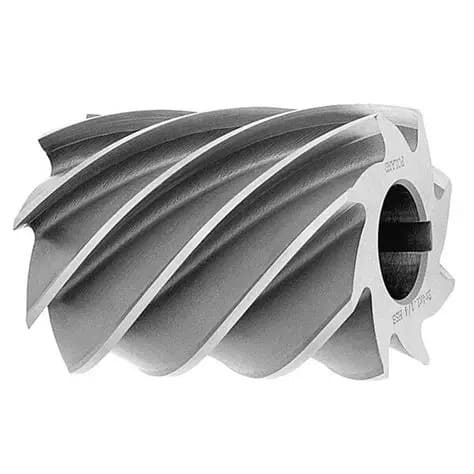
Heavy‐duty cutters have fewer teeth and a helix angle between 25° and 45°. They are built for fast, aggressive material removal. These cutters handle deep roughing and bulk stock extraction well.
Slab Cutters
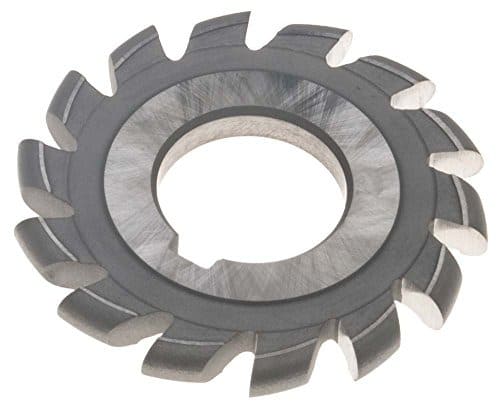
Slab cutters or slab mills are wide and cylindrical. Their design lets them machine large, flat surfaces proficiently in one heavy‐duty pass.
Uses of Plain Milling
Automotive Industry
Plain milling has a key role in automotive manufacturing. It helps produce engine parts in large quantities. The process creates flat surfaces on engine blocks and gearbox housings. These parts must meet strict tolerances to assure vehicles perform reliably.
Construction
Construction sector relies on plain milling to make large structural parts. It produces heavy duty items such as steel beams, columns and plates. These parts are essential for buildings and industrial machines.
Aerospace Sector
Aerospace manufacturers use plain milling to make precise aircraft parts. The process shapes wing panels, fuselage sections as well as structural elements. High‐strength materials like titanium alloys are often used for these components.
Medical Devices
Plain milling is important for making accurate parts for medical devices. It manufactures surgical tools, fixtures and also custom implants. This industrial field uses it because tight dimensional control is necessary to keep patients safe.
Pros and Cons of Plain Milling
Plain milling has been used for many years. It is important to weigh its strengths & weaknesses. Knowing these points helps you decide if this method fits your needs.
Advantages:
- High Material Removal Rate: Plain milling removes large amounts of material quickly. This is ideal for roughing tasks.
- Versatility: Many materials can be milled including metals, plastics as well as wood.
- Flat Surface Production: This process creates flat surfaces with consistent accuracy; and tolerances can reach as close as ±0.01 mm.
- Cost Effectiveness: Standard cutters keep tooling costs down. Therefore it is helpful for high volume production.
Disadvantages:
- Surface Finish: The finish may be rougher than what face milling provides. Some applications may need a smoother result.
- Tool Wear: Removing material quickly can wear out cutters faster. This leads to more frequent maintenance.
Considerations in Plain Milling
Several important factors must be managed to get the best results from plain milling:
- Tool Wear: The cutter edges become dull and lose accuracy after continuous use. To keep precision high, inspect tools often and sharpen them when needed.
- Vibration: Machine chatter affects both surface finish and dimensional accuracy.
At ANCASTINGS, we use custom fixtures to reduce vibration. This is especially important when working with large slabs or thin wall plates.
- Heat Generation: Too much heat can harm the tool and the workpiece. Control temperature by choosing the right coolant and adjusting cutting speeds and feeds.
- Chip Removal: Chips must be cleared efficiently from the cutting area. Poor chip removal can interrupt machining and cause defects. Moreover using a coolant flush or air blast keeps the cutting zone clean.
Plain Milling vs Other Milling Operations
| Milling Type | Tool Axis | Cutting Action | Primary Use | Surface Quality |
|---|---|---|---|---|
| Plain Milling | Parallel to workpiece | Uses the cutter’s periphery | Machining large, flat surfaces | Medium finish |
| Face Milling | Perpendicular to workpiece | Uses the cutter’s face (end) | Creating smooth, flat finishes | High quality finish |
| End Milling | Perpendicular to workpiece | Uses the end and sides | Profiling, pocketing and slotting | Detailed finishes |
| Slot Milling | Parallel or perpendicular | Uses specialized narrow cutters | Creating grooves and keyways | Precision slots |
To Sum Up
Plain milling stands out as a basic machining method for producing flat, precise surfaces quickly. Its fast material removal, flexibility & low cost are essential in industrial fields like automotive, aerospace & construction. For reliable flat surface machining, reach out to ANCASTINGS for expert plain milling services. You can contact us anytime.
Yes. CNC plain milling can quickly machine flat surfaces on metal or plastic blanks. It’s a good choice for creating functional prototype parts.
To handle complex shapes, we use special fixtures like multi axis setups, step‐over methods and optimized tool paths. These approaches help produce accurate forms proficiently.
Yes. This process is flexible and is enough for single prototypes as well as high volume runs. Automation and quick setup let it support both small and large scale production.