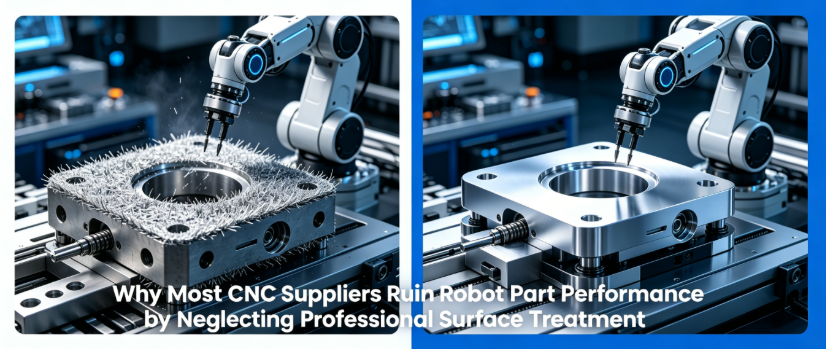
In precision robotic automation, mechanical tolerance and material quality are always valued by suppliers and buyers. However, 90% of ordinary CNC manufacturers treat surface treatment as a simple cosmetic process—only for appearance beautification, not for functional optimization. This is the biggest hidden reason for robot jitter, shortened service life, frequent wear, particle contamination, and unstable high-speed operation. Most buyers attribute robotic failure to assembly errors or material problems, ignoring that unprofessional surface finishing is the core root cause.
For general mechanical parts, surface finish only affects aesthetics and basic corrosion resistance. But for robotic moving parts, end-effectors, joint components, and precision structural parts, surface treatment directly determines friction coefficient, wear resistance, dimensional stability, dust generation performance, and operational consistency. Unlike competitors who only provide standardized surface processing, Ancastings Precision regards surface finishing as a core functional engineering step. We optimize every surface process according to robot operating scenarios, solving invisible failure risks that most suppliers cannot detect, and bringing long-term cost-saving and stability value for European, North American, Japanese, and Australian automation manufacturers.
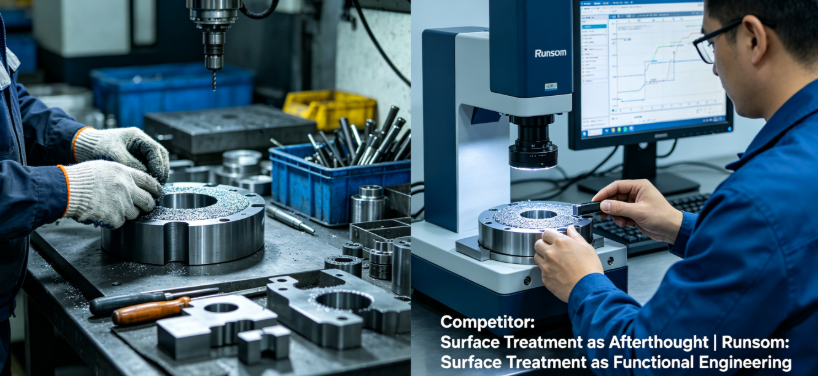
The Core Industry Gap: Competitors Treat Surface Finishing as an Afterthought
The biggest mistake of mainstream CNC suppliers is their wrong cognitive logic: they believe that once dimensional tolerance meets drawings, the parts are qualified. Surface treatment is only a supplementary process for coloring or anti-rust. This outdated manufacturing concept leads to a large number of hidden defects in robotic components. Most factory teams lack robotic application knowledge, so they cannot link surface roughness, coating thickness, and polishing uniformity with robot high-frequency reciprocating motion, precision positioning, and cleanroom operation standards.
Most competitors adopt unified processing standards for all parts. They use the same sandblasting pressure, the same anodizing thickness, and the same polishing process for structural parts, moving parts, and contact parts. This one-size-fits-all surface treatment mode causes three major losses for robot clients: unstable positioning accuracy, accelerated mechanical wear, and invisible particle pollution. These problems do not appear in the initial trial stage but break out in mass production, causing yield fluctuation and unplanned downtime.
Three Hidden Losses Caused by Unprofessional Robot Surface Treatment
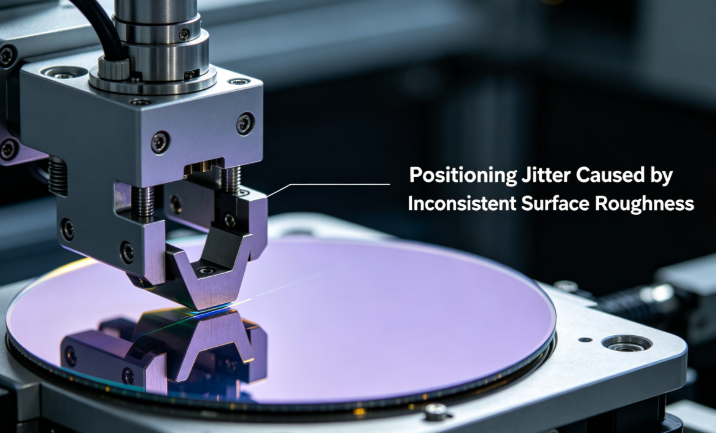
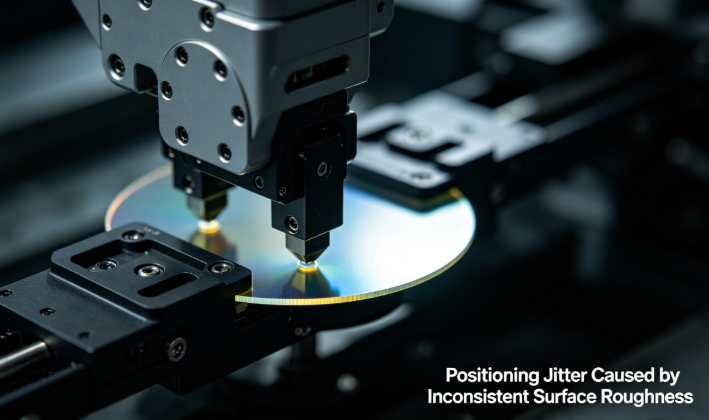
1. Inconsistent Surface Roughness Causes Robot Positioning Jitter
Robot precision positioning depends on consistent micro-friction between moving components. Most ordinary suppliers perform random manual polishing or skip fine polishing to save time. The surface roughness fluctuates drastically, with partial Ra value inconsistency on the same batch of parts. When installed on robotic arms and sliding modules, uneven micro-resistance leads to micro-jitter during acceleration and deceleration. Over time, repeated tiny deviations accumulate into positioning offset, causing picking errors and assembly deviation in automated production lines.
This is the key reason why many automation equipment works well in prototype testing but fails stability verification in mass production. Competitors only focus on macro flatness and overlook micron-level surface uniformity, which is the core guarantee of robot long-term precision retention.
2. Uncontrolled Coating Thickness Destroys Original Precision Tolerance
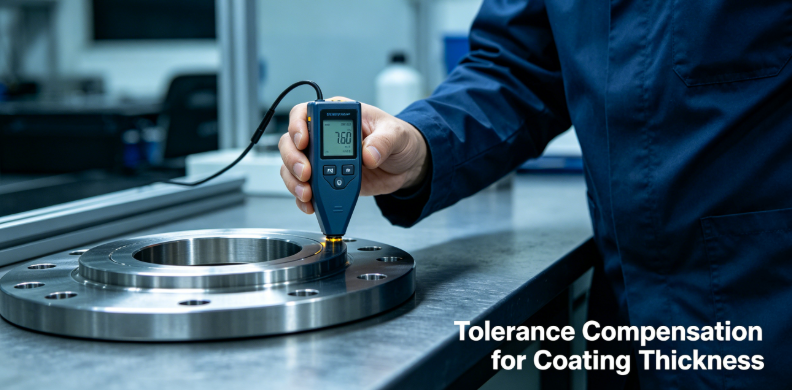
Most standard surface treatments such as ordinary anodizing, plating, and powder coating will form a thickness increment on the part surface. Common suppliers do not reserve tolerance allowance before processing, nor do they detect coating thickness after treatment. For ordinary structural parts, a thickness deviation of 0.01mm to 0.03mm is negligible; but for robot precision matching holes, pin shafts, and sliding grooves, this tiny thickness error will cause assembly tightness, jamming, or loose clearance.
Worse still, many suppliers use uneven coating processes, resulting in partial thick and partial thin surfaces. The robot cannot maintain consistent clearance during high-speed cycle movement, generating abnormal friction and noise. Long-term operation will cause premature failure of bearings and guide rails. This is a typical professional blind spot for generic CNC manufacturers.
3. Rough Surface Residues Trigger Particle Pollution & Cleanroom Failure
For semiconductor, photovoltaic, and medical robots operating in cleanrooms, surface cleanliness is far more important than appearance gloss. Most competitors only perform simple oil wiping and air blowing after surface treatment, leaving invisible polishing powder, metal chips, and chemical residue in tiny surface pits. After long-term robot vibration and friction, these hidden residues fall off to form micro-particles, contaminating wafers, medical consumables, and precision electronic components.
Most B2B buyers do not link surface finishing to cleanroom yield rate. They only audit material and dimension, ignoring surface residual risks. This is why many qualified dimensional parts still fail industrial cleanroom certification.
Ancastings’ Differentiated Value: Surface Treatment as Functional Engineering
Different from all competitors’ passive and standardized processing, Ancastings Precision takes the initiative to customize surface solutions based on robot application scenarios. We do not follow unified industrial standards; we follow robot functional standards. Our core value is eliminating invisible long-term risks for clients and improving equipment stability and service life from the surface micro-layer.
First, we implement scenario-based roughness grading. For robot static structural parts, we adopt decorative and anti-corrosion surface standards. For high-frequency moving parts and friction pairs, we strictly control Ra tolerance within ±0.1μm to ensure uniform friction and stable movement. For cleanroom robotic components, we add ultra-fine degreasing, dust-free cleaning, and residue-free sealing processes to achieve zero particle shedding.
Second, we reserve precision tolerance compensation. Our engineering team calculates coating thickness in advance according to anodizing, plating, and blackening parameters. We reserve accurate machining allowance before production to ensure that the final finished size fully meets drawing tolerance after surface treatment. Effectively avoid jamming, loosening, and positioning deviation caused by coating thickness.
Third, we adopt full-process residue-free treatment. After polishing and surface finishing, all robot parts pass ultrasonic multi-stage cleaning, vacuum dust removal, and professional quality inspection. We eliminate hidden residual pollutants in microscopic pits, ensuring that parts meet medical, semiconductor, and PV cleanroom operating standards. This process is never adopted by most ordinary CNC suppliers due to cost and time reasons.
Real Business Value Clients Gain from Professional Surface Treatment
Most suppliers can only provide “qualified appearance” and “qualified size”. Ancastings delivers measurable commercial benefits for automation manufacturers. First, reduce equipment failure rate: uniform surface friction minimizes robotic jitter and positioning errors, reducing after-sales maintenance costs. Second, extend component service life: standardized anti-wear and anti-corrosion surface processes slow down fatigue aging, lowering client’s long-term replacement costs.
Third, improve cleanroom yield stability: zero-residue surface treatment avoids particle contamination, ensuring stable mass production for semiconductor and PV automation lines. Fourth, improve product competitiveness: stable precision and high durability help European, American, Japanese, and Australian clients pass high-standard industrial audits and enhance market reputation.
Get Custom Robot CNC Surface Treatment Solutions from Ancastings Precision
If you are troubled by robot positioning instability, abnormal wear, cleanroom particle pollution, and unknown batch inconsistency caused by unprofessional surface finishing, stop cooperating with suppliers who only focus on size and appearance. Ancastings Precision takes surface functional engineering as our core advantage, providing scenario-customized surface treatment for medical, semiconductor, photovoltaic, and industrial robot parts.
Send your CAD drawings and technical requirements today. Our professional English engineering team will provide free DFM analysis, customized surface process recommendation, and an accurate 24-hour quotation. We help you eliminate hidden equipment risks at the source and improve long-term operational value.
Contact Us